Used Corrugated Boxes
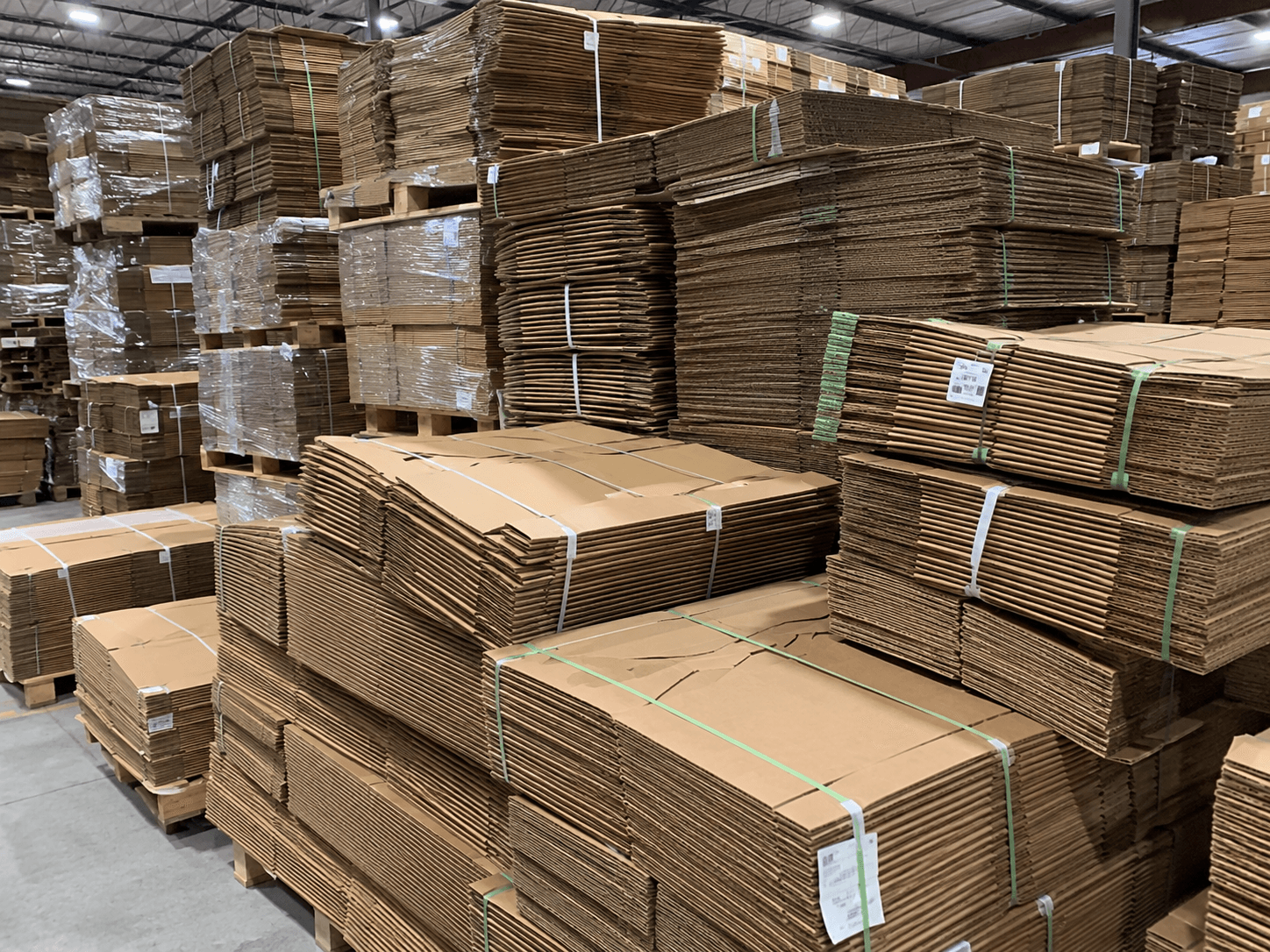
Inspected RSC cartons in every common size.
Quote used corrugated boxes
Tell us sizes, wall count and quantity — we’ll grade and price it fast.
- Buy, sell, recycle, haul & upcycle — all in one request.
- Graded stock so you never overpay for a box.
- Chicagoland-local pickup & delivery.
Once-used shipping cartons that still have plenty of life left. We collect overstock and single-trip boxes from Chicagoland shippers, inspect for crush and moisture, and re-sort them by dimension so you get consistent, clean stock at a fraction of new-box cost.
What you get
- RSC, HSC and die-cut styles
- From small parcel up to 24" cube and larger
- Sorted by size for consistent packouts
- Ideal for moving, storage, e-commerce and freight
- Bulk pricing that drops sharply with volume
Specs at a glance
| Sizes | Small parcel to oversize freight |
|---|---|
| Board grade | 200# / 32 ECT and up |
| Condition | Once-used, inspected, no heavy print bleed-through |
| Min. order | Bundle of 25 |
Sound Secondhand Cartons That Cut Packaging Costs
Used corrugated shipping cartons are the everyday workhorse of our lineup: sound, graded boxes that ship, store and move goods for far less than new. Because most boxes are judged only by whether they protect what is inside, a carton with life left in it does the same job at a fraction of the price. We stock a wide range of sizes and grade every one so you buy exactly what your job needs.
The Range Of Sizes We Stock
Our carton inventory reflects the surplus Chicagoland businesses generate, which means a broad spread of footprints. We regularly carry small mailer and parts boxes, medium multi-depth shippers, large moving and storage cartons and long or wide specialty sizes. Because supply is load-driven, the exact mix shifts, but the common working sizes tend to be well represented.
If you standardize on a handful of sizes, we can watch for matching inbound loads and keep you supplied. For odd or oversized needs, tell us the internal dimensions and target weight and we will find the closest sound match. Right-sizing matters, since a carton that fits its contents needs less void fill and ships more safely.
Understanding ECT And Board Strength
Edge crush test, or ECT, measures how much stacking force a corrugated wall resists and is a practical way to gauge whether a box suits your contents. Lighter ECT board handles lighter goods and lower stacks, while heavier ECT and double-wall board carries more weight and survives taller pallet loads. Matching board strength to contents prevents crushed boxes and damaged product.
Used cartons retain most of their original board strength when they are structurally sound, which is why grading matters. A carton with intact walls and crisp flaps performs close to its rating, while a crushed or delaminated one does not. When you tell us the weight and stacking of your load, we recommend a size and grade whose board strength gives you a comfortable margin.
Common Uses For Used Cartons
Moving is the classic case: households and offices need many sturdy boxes for a short window, and paying new prices for single-use packing makes little sense. Storage is similar, with used cartons holding files, inventory and seasonal goods in warehouses and homes. In both cases value-grade boxes deliver everything the job requires.
E-commerce sellers use right-sized used shippers to protect margins on every order, while freight and B2B shippers move parts and supplies between facilities in graded cartons. Returns processing, kitting and internal transfers all run well on secondhand boxes. Because these uses rarely require a pristine outer, used cartons are a natural fit that frees budget for the product inside.
Condition And Grading Tiers
We inspect every carton for the factors that affect performance: wall crushing, tears and punctures, flap condition, prior tape or labels and moisture. Anything that fails structurally is baled for recycling rather than sold. What passes gets sorted into grades so you can match appearance and remaining life to your job and budget.
A premium grade is clean and presentable with several uses left, suitable when the box will be seen or reused. A value grade is structurally sound but shows honest wear such as prior tape lines or minor scuffs, ideal for internal storage, moves and freight. We describe each grade plainly so there are no surprises when you open the load.
Cost Savings Versus New
The core appeal of used cartons is price. A sound secondhand box commonly costs well below a comparable new one, often less than half depending on size and grade. For a household move that is a modest but real saving; for a shipper burning through thousands of boxes a month, it is a meaningful line-item reduction across the year.
Those savings come without sacrificing function for the many jobs where the box is purely protective. You are paying for the fiber and structure you actually use, not for a fresh surface nobody will notice. Reserve new boxes for the shipments where presentation or a strict spec matters, and let used cartons cover the rest to keep overall packaging spend low.
Right-Sizing To Protect Product
A box that closely matches its contents ships more safely and cheaply because there is less empty space for the product to shift, less void fill to buy and less dimensional weight to pay for. Oversized cartons invite crushing and rattling; undersized ones bulge and fail. Because we carry a wide range of used sizes, you can dial in a close fit without buying custom.
Multi-depth used cartons are especially handy since they can be scored down to a shorter height, letting one box serve several product sizes. When you send us the dimensions of your items, we match cartons that fit snugly, reducing damage rates and fill costs. Good fit is one of the simplest levers for cutting both shipping cost and product returns.
Buying And Reordering
To buy, send us the sizes, quantities and grade you need along with pickup or delivery preference, and we will confirm current stock and pricing. Yard pickup in Alsip is fastest for smaller counts, and we coordinate delivery for larger orders. If an exact size is momentarily out, we will suggest a close alternate.
For businesses that reorder the same sizes, standing orders smooth out supply and let us hold matching stock as loads arrive. Tell us your monthly volume and we will align purchasing so you are not caught short. Reusing cartons this way turns a routine cost center into both a saving and a sustainability win.
Pick The Right Used Carton Every Time
- Send internal dimensions and load weight for the best match
- Match ECT and board strength to your stacking needs
- Choose value grade for storage, moves and freight
- Use premium grade when the box will be seen
- Right-size to cut void fill and dimensional weight
- Ask about multi-depth boxes to cover several sizes
- Standardize sizes to simplify reordering
- Keep stored cartons dry to preserve board strength
Questions & answers
Are used cartons strong enough to ship?
What does ECT mean and why does it matter?
How much cheaper are used boxes than new?
Can you match an unusual box size?
What condition should I expect?
Can I set up recurring orders?
Selecting Used Corrugated Boxes By Wall, Size And Grade
Used corrugated cartons are the everyday backbone of a reuse-first operation: cheap, plentiful, and perfectly capable for internal moves, staging, and behind-the-scenes shipping. Buying them well means reading wall type, size availability, and condition grade instead of just chasing the lowest price. Here is the detail to do that.
Where Used Cartons Excel
Used boxes are ideal wherever appearance does not reach a customer. Internal transfers, scrap consolidation, kitting, returns processing, moving, and archive storage all run beautifully on used stock at a fraction of new cost.
Because these jobs tolerate cosmetic wear and slight size variation, paying for pristine new boxes is simply money left on the table. The box does its work and then recycles, exactly the reuse-first pattern that lowers both spend and waste.
The art is drawing the line: keep new for the tier that a customer opens, and route everything behind that line to used. That single policy often reshapes a corrugated budget.
Wall Type In Used Stock
Used single-wall cartons dominate availability because they are the most produced. They cover light-to-medium loads and fold flat for storage. Used double-wall is scarcer but valuable for heavier internal loads and better stacking in a warehouse.
The original board rating still applies, but wear reduces effective strength, so treat a used double-wall as roughly a fresh single-wall for demanding tasks. That conservative rule prevents surprises.
When you need a specific wall type in volume, tell us early. Used supply fluctuates with what comes through our doors, so lead time on a particular wall or size can vary.
Common Sizes And Availability
Used cartons cluster around popular commercial sizes because those are what businesses buy new and later retire. Small parcel cubes, medium multi-depth shippers, and large moving cartons are usually the easiest to source in quantity.
Odd or oversized dimensions are harder to find used because fewer exist and they retire less predictably. For those, new may be the more reliable route despite the higher price.
We keep the common sizes in stock and can advise when a used size simply is not available in the volume you need, so you are not left waiting on material.
Understanding The Grade Ladder
Grade A used cartons are clean, dry, sound, and often look nearly new, suitable even for light customer-facing use. Grade B shows tape scars, print, or minor crushing but functions fully for internal work. Grade C is best for a single final use or scrap consolidation before recycling.
The ladder lets you buy exactly the condition your job needs. Paying for Grade A to hold scrap wastes money; using Grade C for a semi-visible pack disappoints.
We describe grade honestly on every load so you can match condition to purpose and avoid both overpaying and under-delivering.
Moisture, Cleanliness And Odor
Because corrugated absorbs moisture, a previously damp box loses strength even after it dries, and may warp or delaminate. We screen used stock for moisture history and reject or downgrade compromised units.
Cleanliness and odor matter for any application near food, textiles, or sensitive goods. Residue, dust, or smell can transfer, so those uses call for higher grades and careful inspection.
A quick smell and squeeze test at intake catches most problem boxes. When in doubt, route the questionable unit to scrap rather than reuse.
Flattening, Storage And Handling
Used cartons store best knocked down flat, banded, and kept dry and off the floor. Flat storage saves space and preserves shape, while damp or crushed storage undoes the value of buying used in the first place.
Rotate stock first-in first-out so older boxes do not sit long enough to warp or yellow. Reassemble just before use to keep the flaps crisp and the seams strong.
Good handling turns a used box from a one-time bargain into a genuinely repeatable resource across several cycles.
Buying Checklist For Used Cartons
Before ordering, confirm the inside dimensions you need, the wall type, the minimum acceptable grade, and the quantity. Decide whether the job can tolerate variation, since used loads spread more than new.
Ask how the load was sourced and stored, and whether moisture or contamination was screened. Clean sourcing is the difference between a bargain and a headache.
Finally, plan the end of life: if the boxes recycle after one more use, factor that into the cost and your diversion reporting for a complete picture.
Used Carton Grade Ladder
| Grade | Look | Strength | Best Use |
|---|---|---|---|
| A | Near-new | High | Light facing |
| B | Marked | Sound | Internal ship |
| C | Worn | Reduced | Final use, scrap |
Size Availability Snapshot
| Size Class | Availability | Best For |
|---|---|---|
| Small cube | High | Parts, parcels |
| Medium ship | High | General ship |
| Large moving | Good | Moves, bulk |
| Oversized | Limited | Consider new |
| Odd sizes | Scarce | Consider new |
Get The Most From Used Cartons
- Reserve used for jobs a customer never sees
- Treat used double-wall like fresh single-wall for load
- Order common sizes for reliable volume availability
- Match grade to purpose to avoid overpaying
- Screen for moisture history and odor before reuse
- Store knocked down flat, banded, dry, off the floor
- Rotate stock first-in first-out to prevent warping
- Plan end-of-life recycling into your cost picture